University Admission in Bangladesh: An Overview
Choosing a university is an important decision for students after completing HSC, A-Level, diploma, or an equivalent qualification. Bangladesh has a wide range of public universities, private universities, specialized institutions, and other higher education options. Each institution may have different admission requirements, application procedures, academic programs, and deadlines.
This university admission guide in Bangladesh explains the major steps students should understand before applying. From choosing a university and subject to preparing documents and completing the application, this guide can help students plan their admission journey more confidently.
Types of Universities in Bangladesh
Students in Bangladesh can consider different types of higher education institutions depending on their academic background, preferred subject, budget, and career goals.
Public Universities
Public universities are government-supported institutions that offer undergraduate and postgraduate programs across many academic disciplines. Admission to many public universities is competitive and may involve an admission test, depending on the institution and program.
Private Universities
Private universities offer undergraduate and postgraduate programs in areas such as computer science, engineering, business, law, pharmacy, English, and other disciplines. Their admission processes, tuition fees, academic calendars, and scholarship policies vary from one institution to another.
Specialized and Other Institutions
Students can also explore specialized universities and institutions focused on areas such as engineering, agriculture, medical education, technology, arts, and other professional fields.
Who Can Apply for University Admission?
Admission eligibility depends on the university, department, and degree program. Generally, undergraduate applicants need to have completed HSC, A-Level, diploma, or an equivalent qualification.
Some programs may have specific subject requirements. For example, science-related programs may require students to have studied particular science subjects. Certain universities may also establish minimum GPA or grade requirements.
Students should always check the latest official admission notice of the university and department before applying because requirements can change between admission cycles.
How to Apply for University Admission in Bangladesh
The admission process can differ between universities, but students generally follow several common steps.
- Research universities and available programs.
- Check the admission requirements.
- Review the application deadline.
- Prepare the required documents and information.
- Complete the online or prescribed application form.
- Pay the application fee when applicable.
- Download or save the application confirmation.
- Prepare for the admission test or interview if required.
- Check the admission result or selection status.
- Complete final admission and registration within the specified deadline.
Documents Commonly Required for University Admission
The exact documents depend on the institution and program. Students may commonly need academic certificates, mark sheets or transcripts, photographs, identification documents, application information, and other supporting documents.
Before submitting an application, students should carefully read the official admission notice to determine which documents are required and whether original or scanned copies are needed.
University Admission Tests
Some universities and programs require applicants to take an admission test. The subjects included in the test depend on the university and academic unit.
Students preparing for an admission test should first understand the syllabus and question pattern. Regular practice, revision, mock tests, and time management can help students become familiar with the examination format.
How to Prepare for an Admission Test
- Understand the official syllabus.
- Review important concepts from previous academic studies.
- Practice questions regularly.
- Take timed mock tests.
- Review mistakes after every practice test.
- Keep a realistic daily study schedule.
- Follow official admission notices for important updates.
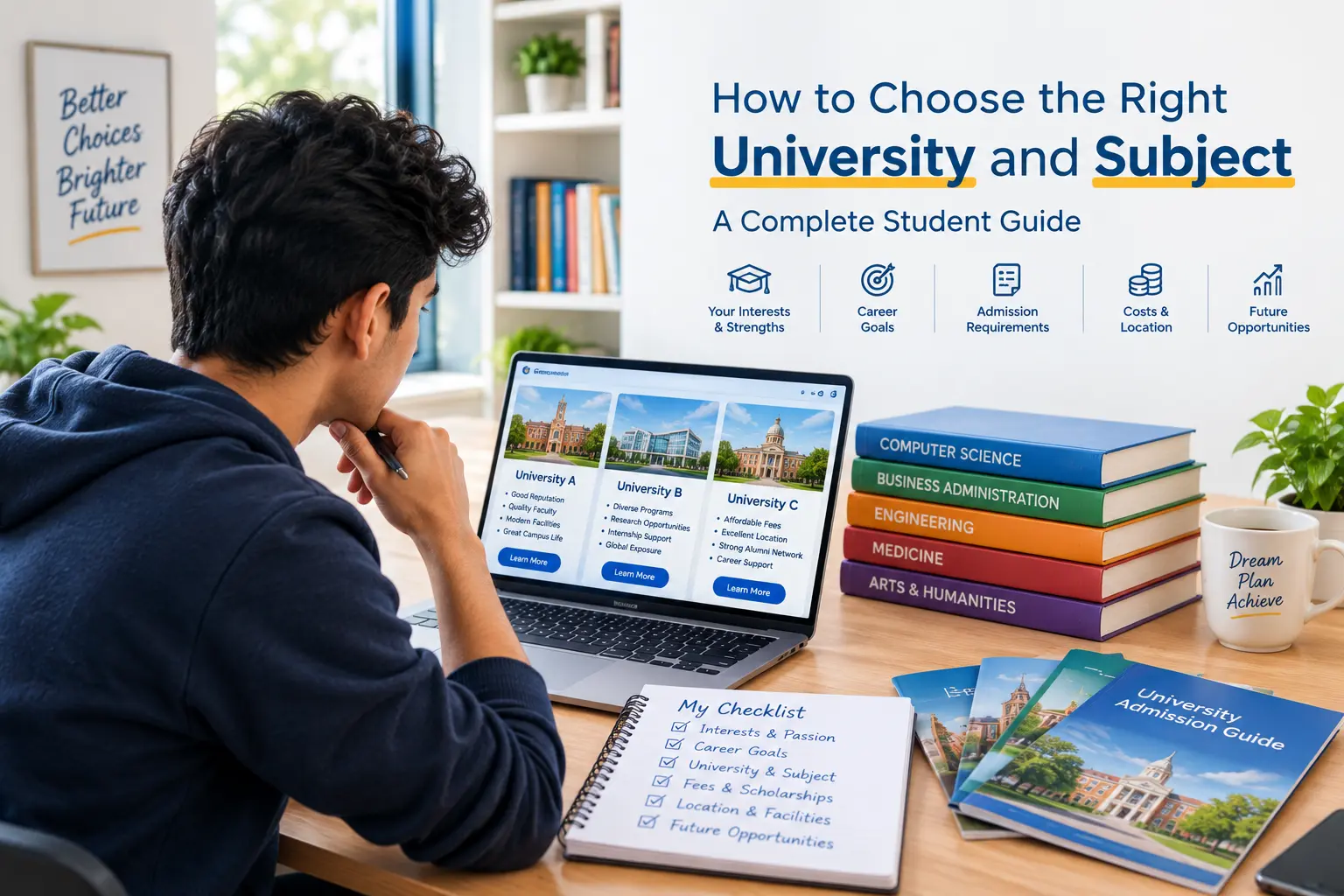
How to Choose the Right University
Students should not select a university based on a single factor. Academic programs, curriculum, tuition fees, location, facilities, faculty, student support, scholarship opportunities, internship opportunities, and career-related opportunities can all be considered.
It is also useful to compare the specific department rather than comparing universities only by their overall reputation. A university may have different strengths across different departments.
How to Choose the Right Subject
Choosing a subject is another important part of university admission. Students should consider their interests, academic strengths, career goals, preferred working environment, and future opportunities.
For example, students interested in software development and technology may explore computer science, software engineering, information technology, or related programs. Students interested in business may consider business administration, accounting, finance, marketing, or economics.
The best choice depends on the individual student's interests, qualifications, goals, and circumstances.
University Admission Costs
The cost of university education varies considerably depending on the institution, program, and type of university. Students should consider not only the admission or application fee but also tuition, registration, examination, laboratory, transportation, accommodation, books, and other educational expenses.
Before choosing a university, students can prepare an estimated education budget for the entire degree rather than looking only at the initial admission cost.
Scholarships and Financial Assistance
Many universities provide scholarships, tuition waivers, or other forms of financial assistance according to their own policies. Eligibility may depend on academic performance, financial circumstances, admission results, or other criteria.
Students interested in financial assistance should check the university's official scholarship and tuition-waiver information and understand the eligibility requirements before applying.
Important Admission Dates
Admission schedules vary from one university and academic year to another. Students should keep track of application opening dates, application deadlines, admission test dates, result publication dates, and final admission deadlines.
It is a good practice to check the official university website and admission notice regularly instead of relying only on social media posts or unofficial information.
Common University Admission Mistakes to Avoid
- Missing the application deadline.
- Entering incorrect information in the application form.
- Ignoring program-specific eligibility requirements.
- Waiting until the last day to submit an application.
- Failing to keep application credentials and payment information.
- Preparing without checking the official syllabus or admission notice.
- Choosing a subject without considering personal interests and career goals.
- Relying entirely on unofficial admission information.
University Admission Checklist
Before applying, students can use the following checklist:
- Choose potential universities.
- Choose preferred academic programs.
- Check eligibility requirements.
- Check application deadlines.
- Prepare academic documents.
- Prepare identification documents and photographs.
- Complete the application correctly.
- Pay the required application fee.
- Save the application confirmation.
- Prepare for the admission test if required.
- Check admission results.
- Complete final admission within the required time.
Frequently Asked Questions About University Admission in Bangladesh
When should students start preparing for university admission?
Students can start preparing before completing HSC or an equivalent qualification by researching universities, subjects, admission requirements, and potential career paths.
Can students apply to multiple universities?
Students can generally apply to multiple institutions when they meet the respective eligibility requirements and complete each institution's application process. However, students should check the rules and deadlines for each university.
Is an admission test required for every university?
No. Admission requirements vary by university and program. Some institutions or programs may require admission tests, while others may use different selection criteria.
How can I find the latest admission information?
The safest approach is to check the official website and official admission notice of the university. Requirements, deadlines, fees, and procedures can change from one admission cycle to another.
How should I choose a university subject?
Consider your academic background, interests, strengths, career goals, program curriculum, costs, and future opportunities before making a decision.
Final Checklist for University Applicants
University admission becomes easier to manage when students plan ahead and verify information carefully. Research your options, understand the eligibility requirements, prepare your documents, track important dates, and follow the official instructions of each university.
Most importantly, avoid making admission decisions based only on rankings or what other students choose. Consider your own academic interests, career plans, financial situation, and long-term goals when selecting a university and program.
EICL aims to provide students with useful educational resources, admission information, scholarship guidance, and learning support to help them make informed academic decisions.